Showing posts with label BJCP. Show all posts

Sunday, September 5, 2010

Wichita - Home of Aged Craft Beer

We drove down to the Air Capital of the World this past weekend, primarily so that I could take the BJCP exam. I wrote furiously for three solid hours, trying to let everything I know about beer, malt, water, and styles pour onto the pages. I'll find out how I did in a handful of months...

After completing the exam, Mr Wort Hog and I headed over to Goebel Liquor, home of Rob's World of Beers. There are several refrigerated cases of beer there, and I think about 3 full aisles of beer as well as an entire wall. Selection is not lacking at this place, and you're bound to find something you've never had. But what really sets this place apart is the selection of vintage beer. They have magnums of Anchor's Our Special Ale going back to 2005 (and at $9.99 each, we couldn't NOT buy some!). They had 6 years of Anchor's Bigfoot. Several years of Avery's Mephistopheles, JW Lee's, Ola Dubh, and a bunch of others. These guys have done an incredible job of setting aside beers to age & bring out later. I loved it.

Goebel Liquor

After stashing the beer in our temperature-controlled hotel room, we made our way over to The Anchor and joined most of my fellow examinees for a round and some food. The food was quite tasty (their house-made potato chips were awesome), but the beer selection is really the reason to go. Their draft list seems to frequently update and included Tumbler and Old Rasputin on nitro (yum!). They also have quite a few bottles in coolers, including some Boulevard Imperial Stout.

After a couple of beers, though, everyone parted and we headed over to River City Brewing Company in Old Town (not to be confused with either River City Brewing Company in Sacramento or Jacksonville). It was just a short walk away, and it's always fun to check out the local brewpubs. I tried ordering their oak-aged saison, but they'd just run out of it so I got their ESB instead. I was happy with what I got, but it wasn't anything special. Mr Wort Hog's chocolate bock was a bit on the sweet side, so after finishing off our beers we headed back to The Anchor to wrap up the evening - which included a bottle of that Imperial Stout.


It was a little on the syrupy side and I thought John's observation that it had that occasional aged-stout "soy sauce" characteristic was spot on. It was good, but to be perfectly honest I liked it better when it was young. 

The Anchor's Strong Ale Fest is coming up in November (on the 6th) so mark your calendars. It's all day long and is followed by a Hair of the Dog Brunch the next day. Sounds like a fun time, and they're sure to have some excellent brews.

Tuesday, June 29, 2010

Style Spotlight: Cream Ale

A while back, I was trying to do a style of the week. It was going well for a while… and then work got busy – and stayed that way. But I really want to stick with style guidelines and talking about them for a few reasons. One, I think a lot of misinformation about styles swims around on the interwebs - such as the idea that a "Double IPA" is somehow authoritatively different from an "Imperial IPA". I'll never forget getting into a disagreement about that with a bartender in Seattle where I was told that he was right, I was wrong, and there was a reason he was BEHIND one of the country's best bars and I was not.

Someone didn't know how to earn tips.

Two, I'm taking the Beer Judge Certification Program (BJCP) exam in September, and this will help me study. Knowing and understanding different styles is not just based in tasting them, but knowing what properties are typical of the style as well as their history. Finally, I want to focus on commercial examples of beers that not only exemplify styles but are available in the KC metro area. I'm going to stick with the BJCP guidelines for now because I think it's a good – and standard – starting point for style recognition. And seeking out commercial styles that I can get here will only help me study. (Study... yeah, that's the ticket...)

Today's style is Cream Ale, partially because I recently came back from Milwaukee and had a New Glarus Spotted Cow (which you can't get outside of Wisconsin or internet trades. What was I just saying about KC availability?). But also because I think it's a style that has several misconceptions about what it is. No, it doesn't have cream in it. It doesn't have lactose or anything dairy-based at all. And it's not because it's served on nitro or has a creamy mouthfeel (that's called Smooth Ale across the pond). It's actually a pretty old style, one which managed to survive Prohibition (shudder).

So what is it? It's one of the truly American styles (along with California Common) and was initially created by ale houses in the states to compete with American lagers. Though it is fermented with ale yeast (though some breweries, like Genesee, use lager yeast), it's fermented at cool temperatures then lagered for at least a few weeks. Ale yeasts typically throw esters at warmer temperatures, and fermenting them at lower temperatures keeps the fruity esters at bay. It also often includes corn as an adjunct (a very American ingredient!) to create a slightly sweet but still crisp flavor.

The result is a clean, light ale that is neither bitter nor malty, is highly carbonated, and very refreshing. It's the lawnmower beer of the ale world.

Some examples:

- Anderson Valley Summer Solstice Cerveza Crema (I need a beer just typing that out)
- Genesee Cream Ale
- Rogue Honey Cream ale

If you're ever in Wisconsin, do yourself a favor and pick up a Spotted Cow. It's definitely worth tipping (back). har har.

Monday, May 17, 2010

I'll take American Craft Beer History for $200, Alex

In the spirit of American Craft Beer Week, here's a little bit of trivia about some true American craft beer pioneering. (I'd say pionbeering, but that might be just a bit too much...)

Back in the 1980s, Scott Birdwell out of Houston was in San Rafael, CA for an annual home beer & wine convention, when he met up with Byron Birch. Byron, owner of a homebrew shop in San Rafael, shared with Scott a recipe for a dark ale named "Purple Passion Dark Ale" (I am not sure I'd admit to that). The recipe made a beer that was dark, malty, a little roasty, quite hoppy - and did very well in state competitions as well as with customers. It was, however, way out of style for any of the BJCP brown ale categories, so it never fared well against style standards or national competitions.

Scott enjoyed the beer so much, however, that he decided to create a new "California Dark" category for Houston homebrew competitions (named such as a nod to his California friends). Within a couple of years, the American Homebrewers Association (AHA) added the dark, hoppy style to its style categorizations and named it "Texan Brown Ale" due to the popularization of the style in regional competitions there. Over time, the AHA renamed the style to...

(drumroll, please)


... American Brown Ale.

Yep, the style we know and love today as American Brown overcame prior lives as Purple Passion, California Dark, and Texas Brown. If it managed to survive those, surely it's worth drinking. So there you have it - an American beer style favored and recognized by homebrewers, then popularized by commercial craft breweries. Truly a great example of the spirit of American Craft Beer week.

Beers within this style should be dark in color and should taste slightly roasty (but not as roasty as a stout or porter), chocolatey, malty, and at least moderately hoppy (if not very hoppy). The hops definitely play a prominent role in American Brown ales, and they're typically American (citrusy, piney, resiny). Contrast this to English brown ales that are sweet and malty with a low hop profile (which aren't really available here) or are dry, caramelly, nutty, and also have a mellow hop flavor and aroma (think Newcastle or Samuel Smith Nut Brown).

Probably the first commercial American Brown was Pete's Wicked Ale (brewed by Pete's Wicked, started by homebrewer Pete Slosberg), but some great examples of the style include Bell's Best Brown, Lost Coast Downtown Brown, and Moose Drool (in cans!).

Speaking of home brewing (and craft beer, while we're at it), did you know Bell's Brewing started out nearly 30 years ago as a homebrew supply shop named Kalamazoo Brewing Company?

Now you do.

Wednesday, April 28, 2010

On the Road Again: St Louis

This post is part 2 of our our homebrew judging adventures this spring. Our trip to the other side of the state was probably one of my favorite visits to date. The weather was perfect (upper 70s and blue sky!), the beer was excellent, and we found some great new places for food. The main purpose of our trip was to judge homebrew at the Garage Brewers Society (GBS) Champion of the Pint competition, but we made a full weekend out of it.

Our arrival in town on that Friday evening was initiated by a small trip to Trader Joes in Chesterfield to pick up some snacks (and mesquite honey to make mead), then a hop over to the International Tap House for some beers. I was exhausted but mustered enough strength and stamina to drink a few beers, including the spectacular Avery Black Tot. Take note - this will be available in bottles at the Flying Saucer's 2nd anniversary bash this Sunday. It's a stout aged in rum barrels that really impressed me - sweet but not cloying, boozy without being hot, and lots of complex fruit character (is that raisin? Prune? No wait, fig?).

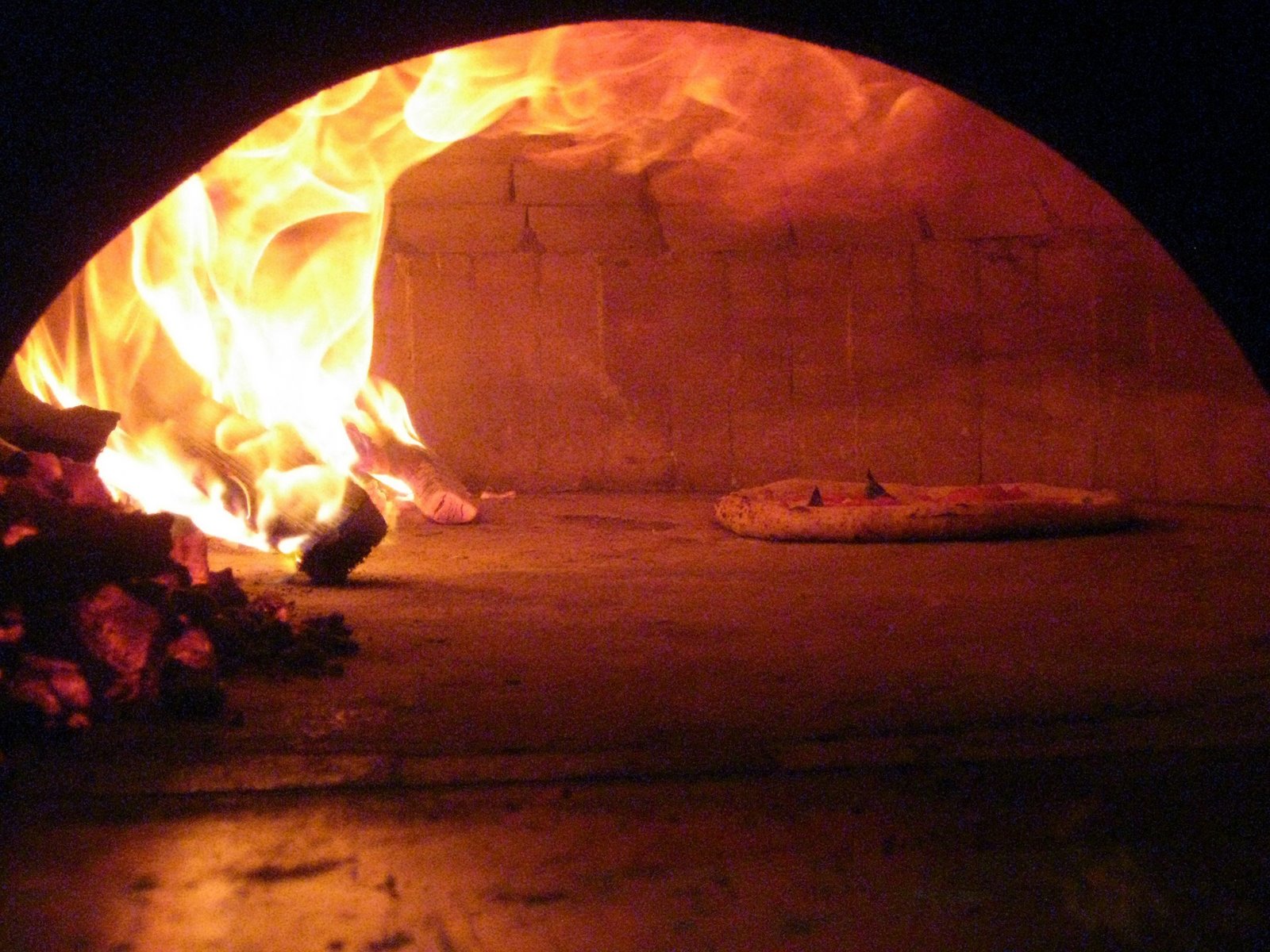
Saturday was the competition, and we worked up a hunger judging a bunch of homebrews. We're both big fans of traditional Neapolitan pizza, but it's unfortunately relatively hard to find in most parts of the country. The Good Pie in St Louis brings the style to the Midwest, and with competence.

We arrived around 7pm, made a bee-line for the bar, and ordered the cured meat plate and a couple of beers. The plate came with a good assortment of prosciutto, salami, pancetta, and a couple other items I can't recall. It was served with a piece of olive-oil-brushed pizza crust which was a wonderfully thin, charred, crispy-chewy authentic Neapolitan crust. I'm talking "baked in a wood oven at 900 degrees Fahrenheit for less than two minutes" kind of awesome.

I washed that down with the O'Fallon Wee Heavy that I thoroughly enjoyed, but I wish I'd at least taken a few notes as I don't really remember the specific qualities of the beer (hey, it was a long day). Our main dish was the Pizza Napoli:  anchovies, mozzarella, chili, and basil. Simple, fresh, and delicious. It was my first pizza I've ever had with anchovies, and I was surprised at how much I enjoyed it - and I would definitely recommend it, even if you're hesitant about fish on pizza. While the tap and bottle lists aren't extensive and their website's out of date, what's on is very thoughtful and current. And if you're dying to know what they do have, it looks like they frequently tweet tap announcements.

We crossed the street to Buffalo Brewing, where we enjoyed very good versions of a double IPA and a sweet stout. Incidentally, the sweet stout was the gold-medal winner of a GBS chili-cookoff competition - thereby earning the right to be brewed & served at Buffalo. Way to support local home brewers, Buffalo! These guys are kind of in a strange location for a brewpub, as there are a few night clubs immediately near by and - as a result - lots of people in fancy clubber garb standing alongside red velvet ropes. Despite that, I recommend checking this place out if you're ever in STL. Every time we've gone, we've had good beer and the staff is always friendly.

We then we took the car back to our hotel before heading off to Schlafly's taproom to close the night. Schlafly was great, as always, and I've written about them before so I won't go into it again here. I sure do love their Kölsch, though, and always enjoy having it on tap.

The next morning, we enjoyed a wonderful brunch at Bridge, another fine beer establishment in St Louis. Owned by David Bailey, who also owns Bailey's Chocolate Bar and Rooster, Bridge offers over 45 craft beers on tap and over 100 from a bottle. What I really liked about Bridge was that they offered any tap beer in a 4oz glass. It's a perfect size for getting a full impression of a beer without growing tired of it - alternately, it provides a great way to sample a handful of strong beers without getting completely wasted.

As for food, we stuffed ourselves silly. We ordered smoked paprika popcorn (good, but not amazing) and a plate of mixed house pickles to start. The pickled grapes were a lot of fun and I was surprised when our bartender said some people get pissed that they include them. We also ordered a board of roasted duck breast on focaccia with cassis conserve as well as a small side of salt & vinegar potato salad. The board of duck breast was HUGE (8 pieces I think) and we didn't finish it, but it was wonderful. The potato salad was neither as salty or vinegary as I expected, which led to a bit of disappointment. I was expecting something like salt & vinegar chips (which I adore), but it was more like cold German potato salad that needed more salt.

Finally, for our main and final course, we ordered a plate of mixed cheese with more focaccia:  Methusela from Heartland Creamery, Comté Marcel Petite, and Rogue Creamery Smoked Blue (which turned out to be their regular Oregon Blue, not the smoked-over-hazelnut-shells variety. Bummer.).

Overall, we had a great time in St Louis and no doubt brought home a few thousand well-earned calories to boot. Regardless, I look forward to our next trip out there to explore more of the city's beer destinations. New places seem to be popping up pretty frequently and the craft beer scene is really taking off.

And so this post ends with a nod to St Louis Craft Beer Week. After our last visit, we look forward to yet another one of our own St Louis Craft Beer Weekends.

Sunday, February 21, 2010

Judge not, that ye be not judged


Unless you're at a homebrew competition.

The Kansas City Bier Meisters hosted their 27th Annual Homebrew Competition this weekend, and Mr Wort Hog and I both had an opportunity to participate in judging. The competition was held at the Holy Field winery out in Basehor on Friday night and Saturday, during which about 30-35 judges tasted, judged, and ranked submitted beers, ciders, and meads.

Here are the basics on how a competition works:
  • Homebrewers submit their beers to a specified location, assigning each submission to a competition category such as Robust Porter or Doppelbock - or something special to the competition such as "lawnmower beer" or "eis-anything"
  • Judges sit in groups by category and review the beers based on aroma, appearance, flavor, mouthfeel, and an overall impression. Each group has a head judge.
  • Stewards are there to provide the beers and manage the score sheets as well as bring up any logistical issues with the organizers. They can also sample the beers being judged, if there is enough after the judges receive their pours.
  • After each judge completes his or her score sheet for the beer in review, the judges discuss their findings and rankings then agree on a final numerical score. This process repeats until all entries have been reviewed. 
There's a lot more to it, but that's the general idea. More information on the process can be found in these quick guidelines or on the BJCP's website.

Friday was a fun introduction to the process, especially since I got to judge melomels (fruit meads). This category also includes pyment (grape juice & honey) and cyser (apple juice & honey), but we didn't have any cyser submissions this year. I did, however, get to try two pyments, which I thought were fantastic. One was made with Riesling and the other with Gewürztramier grapes, and both were sweet and light with a subtle - but recognizable - honey presence. I've been inspired to try making pyment, as I really enjoyed it; I'm a big fan of Sauvignon Blanc and Semillon, so I might try one (or both!) of those with some light honey such as Orange Blossom or Sage. The evening closed with several people sharing homebrew, mead, melomel (fruit mead), and a few commercial brews. One couple from Iowa brought some commercial chocolate porter and homemade berry melomel. Mr Wort Hog had suggested a while back mixing melomel and beer, and Friday's combo was a confirmation of how great idea that truly is.

Saturday morning started off with breakfast and a slideshow of Freestate brewer Geoff Deman and chef Rick Martin's trip to Belgium last year, where they walked us through some of the breweries and beer cafes they visited. They described how the brewing industry in Belgium is quickly becoming consolidated as larger breweries buy up the smaller ones, one after the other. Duvel Moortgat bought Liefmans (and closed it); they also own Ommegang out of Cooperstown, NY, Maredsous, and Brasserie d'Achouffe. InBev (formerly Interbrew) owns a ton of Belgian breweries now, including Leffe, Stella Artois, Hoegaarden, Belle Vue, and a handful of others. So while these breweries in a country known for great beer get bought up by the big boys, small breweries in the States are popping up out of nowhere and taking on the conglomerates. It's an interesting time for beer, that's for sure.

The competition resumed and I judged German wheat & rye beers. It was a good reminder that German hefeweizen is really best when fresh; none of the beers we had were really outstanding. After lunch, the final judging session took place and I sat down with my group to judge categories 1 and 6 - Light Lager and Light Hybrid. I really wasn't looking forward to this category, but it ended up presenting two of my favorite beers of the day. Someone submitted a Standard American Lager that reminded me of Budweiser or Coors Original, both of which I actually quite enjoy. It was clean, crisp, lightly bitter, highly carbonated, and very refreshing. The other beer that really stood out was an American Wheat ale that was moderately hoppy - not too much so as to be out of style, but more than your typical bland wheat beer. It reminded me to pick up some Hop Sun once it's released this spring. As an added bonus, Dan of Gone Mild was in my judging group and we had an opportunity to chat for a while about blogging, local beers and goings-on.

Once judging was done, most of the group left for a tour and food pairing lesson at Free State; we stuck behind to relax at the winery and sample a bit of wine - though it's also possible that we forgot to buy tickets for the tour until after it was sold out. Oops. I really enjoyed the winery's Chardonel, which was similar to a Semillon or sweeter Sauvignon Blanc. Lots of green apple in this one, and it was inspiring to find a local white wine that was crisp and dry.

The day wound down with a Belgian-themed dinner and keynote speaker Stephen Pauwels of Boulevard. He talked to the crowd about Belgian brewing, a little history and folklore about Boulevard's beers, and a little on the Collaboration with Jean-Marie Rock. One thing I learned, and thought people might find interesting to know (especially those who think that corn & rice in beer is always a bad thing) is that the grain bill for Tank 7 is 20% corn. Pauwels reminded us all that Belgian brewers almost always use adjuncts (especially candi sugar), and that adjuncts definitely have a place in brewing.

After Pauwels' talk, the awards ceremony started and we found out that we took 3rd place in English Pale Ale for an Ordinary Bitter, 2nd place in Fruit/Spice beer for a Chocolate Russian Imperial Stout, and 2nd for a Cherry Vanilla mead. We also got an honorable mention for an English Mild. Not too shabby!

I had initially signed up to steward, but was assigned to judge instead; I was nervous about doing it but am thankful that I had the opportunity to do it. I enjoyed being challenged to define the characteristics of a beer, felt rewarded when my perceptions aligned with those with much more experience than me, and learned a lot about beer and mead in the process. I would highly recommend doing this next year to anyone with an interest in beer, mead or cider, even if it's just to steward. I met some wonderful people, tasted some amazing beer and mead, and gained inspiration for my own hobby. I wasn't really interested in studying for and taking the BJCP exam, but now I can't wait to take both the beer and mead exams. We'll be judging again next month at the Iowa Brewers' Union competition just outside Des Moines.

If you're interested in participating in competitions, you can find a calendar of national competitions on the BJCP's website. It's definitely a fun experience with a lot of interesting and exciting people, even if you're not a homebrewer.

Wednesday, November 4, 2009

My Favorite Kind of Studying

Mr Wort Hog has been talking about becoming BJCP-certified for a while now, and recently signed up for an exam sitting in January. We've been accumulating study materials as a result: books, articles, and - of course - beer. I'm not taking the exam, but I am learning more about beers as he studies them and we discuss them. While it's fun to try standard examples of styles and note their qualities, there's another aspect of studying that I'm finding particularly fun: detecting off-flavors.

You can easily create most off flavors yourself with a handful of common household ingredients (and a few extra available at a homebrew store). I picked up a six-pack of Sam Adams Light, since the base beer for doctoring should be pretty clean & light - and must have a pry-off crown cap. Guidelines for modifying beers with off flavors are listed on the BJCP site in a handy table. Want to see what an oxidized beer tastes like? You could add 3/4 of a teaspoon of sherry to a 12oz bottle of beer, or simply oxidize the beer by opening it, allowing the CO2 to escape, re-capping it, and storing it at over 100F for a few days. How about a skunky beer? Set a beer (in a green or clear bottle) in a window for a week. (Or, buy a bottle of Grolsch).

I've been doctoring up the bottles & presenting glasses containing the adulterated (and some unadulterated!) beer to Mr Wort Hog for his analysis. It's been fun and a good learning experience. The biggest take-away so far has been that off flavors are most easily detectable when you let the beer warm up (to maybe 55-60 degrees) then swirl it around in your glass. The swirling releases some of the CO2 from the beer, carrying the aroma out of the beer and around the mouth of the glass. And for anyone who has had warm beer, you'll know that when it's warm, the flavor is intensified. (Similarly, I'm sure that's why a lot of people like ice-cold beer - you can't taste it.)

If you're evaluating or reviewing a beer, you'll also want to know if what you're tasting is really an off flavor. If you have a beer that has just a hint of sherry, is that always a bad thing? If it's a Pale Ale, it shouldn't be there - but it can actually add depth and complexity to a Barley Wine. Dimethyl Sulfide (DMS) adds a cooked veggie characteristic to beer, and a little bit is just fine in, say, an American Lager like Budweiser. If you've had a Schlitz Gusto and thought that there was a little roasted corn flavor - that's DMS. But what if your beer tastes buttery? Medicinal? Like almonds? BJCP has answers. Additionally, a great explanation of these flavors can be found on John Palmer's website, or in his book of the same title.

Off flavors are, unfortunately, pretty easy to introduce to beer but can be avoided with some care. For homebrewers, the main concepts are simple (sanitation, fermentation temperature, avoiding exposure to oxygen after fermentation starts, etc) but the details are endless. I still have trouble remembering everything and have a long way to go.

There are also some things we can do as consumers of beer, starting with avoiding beer in clear bottles or the ones near the window at the liquor store, and storing our beer in dark, cool locations of the house (say, the fridge). I know I have been guilty of lazily leaving a six-pack on the back porch in the dead heat of summer. Beer nerd fail!

ShareThis